Newsletter Subscribe
Enter your email address below and subscribe to our newsletter
Enter your email address below and subscribe to our newsletter

 ByJohn A
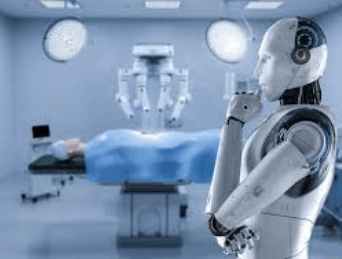
Robotics in modern surgery translates surgeon intent into precise instrument motion, enabling scalable accuracy and repeatable outcomes. Ergonomic interfaces reduce operator fatigue, while tactile feedback sharpens tissue interaction. Imaging and AI enable real-time visualization, planning, and contingency handling, enhancing safety and efficiency. The approach standardizes procedures across disciplines, but questions remain about cost, training, validation, and regulatory pathways. These considerations frame the next discussion on implementation, optimization, and long-term impact in surgical practice.
Robotics in modern surgery augments precision, control, and consistency across procedures by translating surgeon intent into high-fidelity instrument motion. The system enables scalable accuracy, repeatable outcomes, and minimized patient risk.
Robotic ergonomics reduces operator fatigue through optimized posture and interface design, while tactile feedback informs force perception and tissue interaction, allowing nuanced maneuvers that preserve anatomy and enhance procedural efficiency.
Imaging modalities and artificial intelligence jointly sharpen surgical precision by delivering real-time, quantitative guidance and anticipatory decision-making.
Imaging enhances intraoperative visualization, aligning tissue differentiation with instrument trajectories, while AI driven planning optimizes path selection and contingency handling.
Together, they reduce variability, improve accuracy, and support autonomous adjustments, empowering practitioners to achieve consistent outcomes with transparent, controllable, and adaptable robotic workflows.
What are the tangible benefits, upfront costs, and training requirements that define contemporary robotic platforms in surgery?
The framework delivers precise motion control, enhanced visualization, and reproducible outcomes, translating to reduced recovery times and standardized performance.
Costs encompass device investment, maintenance, and disposables.
Training emphasizes simulation, proctoring, and credentialing, ensuring consistent, safe adoption while preserving clinician autonomy and surgical freedom.
The safety, validation, and regulatory pathways surrounding contemporary robotic platforms are defined by rigorous performance verification, standardized risk assessment, and formal clearance processes that govern clinical deployment.
Robust safety culture informs incident learning, iterative design, and system validation, while regulatory science frames evidence thresholds, post-market surveillance, and adaptive pathways for evolving devices, ensuring dependable outcomes within precision-driven surgical ecosystems.
Robot adoption will proceed unevenly; universal standardization across all hospitals is unlikely in the near term. Adoption accelerates where outcomes justify investment, with careful hospital integration delivering measurable efficiency, safety gains, and scalable, outcomes-driven surgical capabilities.
Autonomous execution in contemporary practice remains exploratory; full autonomous surgery without surgeon input is not realized. Machine autonomy shows promise in constrained tasks, but current systems require supervision, oversight, and interventional capability to ensure precise, outcome-focused results.
Typical recovery after robotic procedures varies by surgery type, patient health, and complexity; most patients experience shorter hospitalization and faster return to activity. Outcomes emphasize rapid recovery, with robotic outcomes often showing reduced pain and quicker functional restoration.
Long-term outcomes show mixed results; comparative effectiveness varies by procedure and center. Robotic approaches often match or surpass traditional methods in precision, yet survivorship and complication profiles require procedure-specific evaluation and robust, long-duration data for definitive conclusions.
Robots respond to unexpected intraoperative complications by prioritizing rapid stabilization, enhanced visualization, and precise instrument control; system alerts trigger protocol-driven actions. Robotics ethics guides decision-making, while intraoperative imaging provides real-time assessment for corrective maneuvers and outcome-focused adjustments.
See also: Satellite Internet and Global Access
Robotics in modern surgery consistently translate surgeon intent into precise, repeatable instrument motion, augmenting control and visualization while mitigating fatigue. When paired with advanced imaging and AI-driven planning, outcomes become more predictable, with tighter tissue handling and faster recovery. While upfront costs and training demands are nontrivial, the trajectory points to scalable standardization and safety gains. If a theory holds that automation amplifies human judgment, the evidence here supports it—robotic systems extend capability, not replace it, enhancing patient safety and efficiency.